


Capoeira classes and Capoeira Shows
The workshops are given on the level of the students. This is DETERMINED by age, capability and willingness of the participants. Now following an indication of how capoeira can be offered to the students of various age groups. From cultural projects, elementary school, high school and dance schools. Listed are examples of activities for grades according to age:

Capoeira for kids ( 4 - 8 year olds )
We introduce children in a playful way to capoeira.The basic
ingredients of capoeira like: music, dance interaction and historical story’s are perfect elements to teach them the basics.The children will learn to play the capoeira instruments by simple songs.The actual capoeira movements are told by imitating animals movements. At the end of the class the children create a roda. In this roda the children practise the movements they learnt and the other children observe and support them by playing music and clapping. Playing capoeira the children practice their attentiveness, development, and concentration.
Capoeira for kids ( 8 - 12 year olds )
For children between 8 and12 years of age, capoeira is tought not only in a playful way, but also as a dance and a martial art. Story’s about the history of slavery from Brazil and the development of capoeira are told to the kids. Basic instruments from capoeira are taught by playing simple songs.The basic defense and attack techniques are taught as well as the basic elements of acrobatics and dance. At the end of the class the children create a roda. Children learn a martial art without hurting each other. They are taught to have consideration and respect for each other. Concentration, reaction and the control of impulsive actions are trained.


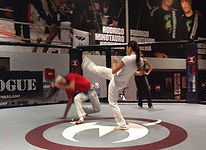
Capoeira for Adults ( 14 year old and up )
The main subjects within the workshop for adults are the two big styles of capoeira: Capoeira Angola and Capoeira regional. Angola is the original and first capoeira form. It is characterized by the slow and low way of moving with the typical Angola rhythm. Capoeira regional is a modern form of capoeira. This is a mix of Capoeira Angola, the African batuque and elements of karate and break dance. This form is more contemporary: faster, more expressive, spectacular, a lot of acrobatics, higher game, many kicks and turning kicks. The rhythm from Capoeira regional is faster. Treating the two major styles of capoeira fits in well with this age group. The Angola music, songs and games tell a lot about the history of slavery and the origins of capoeira game form, it is the base. Regionalism is closer to our present time. It's fast, expressive and dramatic, which motivates young people. At the end of a workshop/course the students gain a basic knowledge of capoeira history and philosophy, they are introduced to capoeira rhythms and songs, some basic capoeira moves and they can participate in a capoeira game in the roda to play both Angola and Regional. Students learn to enter a game where energy gets given and received. In this game it is a continuous interaction of action and reaction. You learn to level yourself with your opponent, different styles and your own limitations. You learn to adjust your movements to the rhythm of the berimbau, so your game matches the rhythm and movement of the music. You work on impulse control, muscle control, and coordination and mutual respect.
Capoeira Shows

Feel the beat of the drums and get ready to experience tribal Brazilian dancing with our Capoeria dance show. When you see capoeira, you see a spectacular Afro- Brazilian martial art in with surprising and graceful attack and defence techniques are mixed with dance, acrobatics and music. Two players, named capoeiristas are challenging one another in a circle of people called roda.
